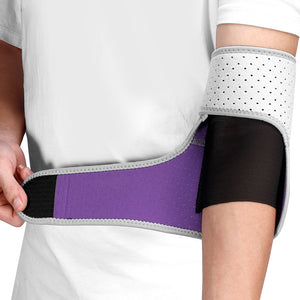
Ankle Brace for Pronation
- Black
- Grey
- Blue
- Pink
- Purple
- Black
- Orange
- Green
- Pink
- Black
- Red
- Blue
- Orange
How do you fix pronated ankles?
If you frequently experience discomfort while walking, running, or even standing for long periods, you might be dealing with overpronation. Pronation occurs when the foot rolls inward too much upon striking the ground. While a slight inward roll is a natural part of human biomechanics for shock absorption, excessive inward rolling misaligns the joints. This places immense stress on the ankle joint itself and can trigger a chain reaction of discomfort that travels up through various body parts, commonly affecting the knees, hips, and lower back.
Fortunately, correcting collapsed arches and restoring proper foot alignment is highly achievable. By taking a proactive approach, you can relieve flat-foot ankle pain, improve your gait, and prevent future lower-body injuries.
Highly Effective Solutions to Correct Pronated Ankles
Correcting overpronation requires a multi-faceted approach that stabilizes the foot while training the muscles to hold a healthier posture. Here are the most effective strategies for fixing inward-rolling ankles.
Utilize an Ankle Brace for Pronation
To immediately address the biomechanical imbalance, using an ankle brace for pronation is a highly effective solution. An ankle support sleeve or brace designed specifically for overpronation helps stabilize the foot and prevent excessive inward rolling. By actively holding the ankle in a more neutral, anatomically correct position, the brace minimizes strain on the tendons and ligaments.
Furthermore, a targeted brace provides essential support to the arch of the foot. This structural reinforcement instantly improves your gait, making walking and running far more efficient while drastically reducing the risk of common overuse injuries like plantar fasciitis, shin splints, and Achilles tendonitis.
Invest in Supportive Footwear and Orthotic Insoles
Wearing the right shoes is a critical component of overpronation treatment. Flimsy shoes with flat soles will only exacerbate the inward rolling of your ankles. Instead, opt for stability or motion-control footwear. These shoes feature a firmer midsole on the inner edge (the medial post), which acts as a barrier to prevent the arch from collapsing downward.
Additionally, pairing your footwear with orthotic inserts or arch support insoles can provide customized relief. These inserts cradle the heel and provide a robust foundation for fallen arches, ensuring your ankles remain vertically aligned with your lower legs throughout the day.
Incorporate Targeted Strengthening and Stretching Exercises
While external supports like an ankle brace for pronation and structured shoes are vital for immediate alignment, strengthening your natural anatomical structures is the key to long-term correction. Weak foot, ankle, and calf muscles often contribute to collapsed arches.
Integrating specific pronated feet exercises into your daily routine can yield significant improvements:
- Calf Raises: Elevating yourself onto your tiptoes helps strengthen the calf muscles and the tendons surrounding the ankle joint, promoting better stability.
- Towel Scrunches: Sit barefoot in a chair, place a towel flat on the floor, and use your toes to pull the towel toward you. This intensely works the intrinsic muscles of the foot arch.
- Short Foot Exercise: Practice contracting the muscles in the arch of your foot to pull the ball of your foot toward your heel without curling your toes. This trains the arch to maintain its lifted shape naturally.
- Ankle Inversion Resistance: Using a resistance band, gently pull your foot inward against the tension to strengthen the stabilizing muscles on the inside of your ankle and lower leg.
Why You Should Not Ignore Inward Rolling Ankles
Leaving pronated ankles untreated can lead to severe chronic discomfort over time. When the feet fail to provide a stable, balanced foundation, the rest of the skeletal system has to compensate. This compensation causes uneven wear and tear on cartilage, strained ligaments, and chronic muscle fatigue.
By actively correcting your stance—combining the targeted stability of an ankle brace, the structured support of proper footwear, and the natural power of muscle-strengthening exercises—you can retrain your posture. Over time, correcting the alignment of your ankles not only eliminates foot pain but also significantly enhances your overall athletic performance and daily mobility.