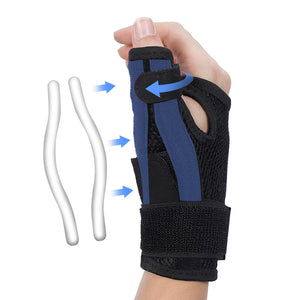
Ankle Brace with Side Stabilizers
- Black
- Grey
- Blue
- Pink
- Purple
- Black
- Orange
- Green
- Pink
- Black
- Red
- Blue
- Orange
How Do You Stabilize Weak Ankles?
Dealing with chronic ankle instability can be incredibly frustrating and painful. Whether you frequently roll your ankles during sports, experience a giving-way sensation while walking, or are recovering from a severe sprain, learning how to effectively stabilize weak ankles is crucial for your mobility and long-term joint health. Unstable ankles can limit your physical activities and increase your risk of future injuries. Fortunately, by utilizing supportive equipment, incorporating targeted exercises, making lifestyle adjustments, and seeking professional guidance, you can regain control and confidence in your footing.
Below are several highly effective strategies to help you stabilize weak ankles, prevent recurrent injuries, and keep you moving comfortably.
Supportive Equipment: Choosing the Right Ankle Braces
When managing weak ankles, external support is often the first line of defense. Wearing the correct type of ankle support can enhance your proprioception (your body’s awareness of its position in space) and provide the mechanical restriction necessary to prevent excessive rolling. Here are the most effective types of braces:
Customizable Support for High-Impact Activities
For athletes and active individuals, a precise, snug fit is vital. Lace-up ankle braces are highly customizable and favored for their exceptional adjustability. They typically feature a durable lacing system that lets you easily adjust the tightness to your comfort level and the level of support you need. You can lace them up tightly around the ankle complex to provide firm, unyielding support, which is especially helpful for individuals dealing with significant chronic ankle instability. These types of braces are highly suitable for dynamic, high-impact activities such as basketball, tennis, soccer, or trail running, where sudden pivots, jumps, and changes in direction can place extreme stress on the ankle ligaments.
Everyday Relief and Circulation Improvement
If you are looking for comfortable support to wear under everyday footwear, elastic sleeves are an excellent choice. Constructed from specialized, stretchy, and breathable materials, these sleeves apply consistent, gentle pressure around the entire ankle joint. A compression ankle brace not only provides functional stability but also significantly improves blood circulation in the area. This enhanced blood flow is essential for reducing the painful inflammation and swelling that frequently occur during or after intense physical activities. Because they are low-profile, they are comfortable to wear for extended periods and are perfectly suited for daily use—especially if your job requires you to be on your feet all day or if you enjoy casual walking. You can simply slip them on, and they seamlessly conform to the natural shape of your ankle, providing a snug, flexible, and warming support.
Hybrid Stability for Moderate Terrain
Sometimes you need a solution that bridges the gap between maximum immobilization and flexible compression. Semi-rigid braces are expertly designed to combine the best features of flexibility and structural support. These braces usually feature a hard outer shell or rigid stays on the lateral (outer) and medial (inner) sides of the ankle, complemented by a soft, padded, and breathable interior. The hard shell acts as a physical barrier, providing structural support that prevents excessive inward or outward ankle movement (inversion and eversion), while the soft interior padding ensures the brace won't chafe or irritate the skin. Choosing an ankle brace with metal side stabilizers is ideal for activities that require a perfect balance between forward mobility and lateral stability, making them heavily favored for hiking uneven trails, performing light sports, or recovering in the mid-stages of an ankle sprain rehabilitation program.
Targeted Exercises to Strengthen Weak Ankles
While bracing provides excellent external support, building internal support through muscle strengthening is equally important. Strengthening the muscles, tendons, and ligaments surrounding the ankle joint creates a natural stabilizing corset.
Resistance Training for Joint Stability
Using a basic resistance band is one of the most effective ways to build strength in weak ankles. By looping a band around your foot and anchoring it to a heavy object, you can perform four-way ankle exercises: pushing your foot downward (plantar flexion), pulling it upward (dorsiflexion), turning it outward (eversion), and turning it inward (inversion). Consistently performing these exercises helps strengthen the peroneal muscles on the outer side of the lower leg, which are critical for preventing rolled ankles.
Proprioception and Balance Training
Ankle injuries often damage the microscopic nerve endings in your ligaments that communicate balance to your brain. To restore this connection, balance training is key. Simple exercises like single-leg stands on a flat surface, or progressing to standing on a wobble board or a foam balance pad, force your ankle to make micro-adjustments. This retraining teaches your ankle muscles to react quickly to uneven surfaces, vastly improving your overall joint stability and preventing future stumbles.
Lifestyle Adjustments and Proper Footwear
Beyond equipment and exercise, your daily habits and the shoes you wear play a massive role in ankle health.
Weight Management for Joint Relief
Maintaining a healthy body weight is an often-overlooked yet vitally important factor in lower-extremity health. Excess body weight places a tremendous amount of additional strain on the ankles, knees, and hips. With every step you take, your ankles absorb a force equivalent to several times your body weight. Losing weight, if you are currently overweight or obese, can significantly reduce the mechanical load on the ankle joints. This reduction in downward pressure makes it much easier for your lower-leg muscles and weakened ligaments to support your ankles effectively, dramatically improving their stability and reducing daily fatigue.
Selecting Supportive Footwear
The foundation of a stable ankle starts with what you put on your feet. Ditch worn-out sneakers and unsupportive flip-flops. Instead, opt for footwear that features a wide toe box for balance, a firm heel counter that locks the back of your foot in place, and excellent arch support to maintain proper foot alignment. Shoes designed specifically for motion control or stability can prevent overpronation (the inward rolling of the foot), which is a common contributor to ankle weakness.
Professional Guidance and Rehabilitation
When self-care methods and over-the-counter supports are not enough to resolve chronic ankle instability, it is time to seek the expertise of a medical professional.
Physical Therapy and Custom Rehabilitation
If your severe ankle weakness is due to an acute injury, recurrent sprains, or a chronic degenerative condition, consulting a licensed physical therapist is highly recommended. A physical therapist can conduct a thorough biomechanical assessment of your ankles, gait, and lower-body strength. Based on this evaluation, they will design a personalized exercise and rehabilitation program tailored specifically to your deficits. They provide hands-on guidance, ensure you perform exercises with correct form, and offer clinical supervision. Therapists may also employ advanced techniques such as manual joint mobilization, soft tissue massage, and dry needling to enhance joint mobility, reduce scar tissue, and restore optimal muscle function.
Comprehensive Medical Evaluation
In some stubborn or severe cases, weak ankles may be caused by an underlying medical issue that requires a doctor's intervention. Conditions such as undiagnosed nerve damage, severe osteoarthritis, cartilage defects, or systemic connective tissue disorders can all manifest as joint instability. It is incredibly important to see a primary care physician or a podiatrist for a proper, accurate diagnosis. A medical professional can order relevant imaging tests—such as X-rays to check for bone spurs or fractures, MRIs to visualize torn ligaments and tendons, or nerve conduction studies to evaluate neurological function. Based on these precise diagnostic tools, your doctor can prescribe appropriate medical treatments, recommend orthotics, or refer you to an orthopedic specialist or surgeon if conservative treatments fail.
By proactively implementing these comprehensive strategies in combination—utilizing the right braces, strengthening the surrounding musculature, managing your weight, and partnering with medical professionals—you can effectively stabilize weak ankles. Taking these steps will drastically reduce the risk of future injuries, alleviate chronic pain, and allow you to return to the active lifestyle you love.