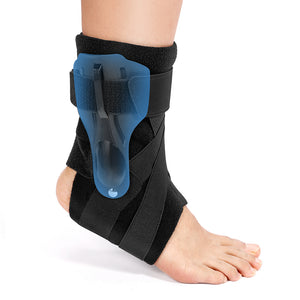
Most Supportive Ankle Brace
- Black
- Grey
- Blue
- Pink
- Purple
- Black
- Orange
- Green
- Pink
- Black
- Red
- Blue
- Orange
How to Rehab Chronic Ankle Instability
Have you ever stepped off a curb, pivoted during a casual run, or walked on uneven terrain only to feel your ankle abruptly roll and give out? This persistent, frustrating sensation of the ankle 'giving way' is a hallmark of chronic ankle instability. Typically developing after recurrent ankle sprains that have not healed properly, this condition can severely impact your daily life, athletic performance, and overall mobility.
When you suffer a severe rolled ankle, the surrounding ligaments can stretch or tear. Without targeted intervention, these soft tissues often heal in a loosened state, resulting in a joint that lacks structural integrity. Fortunately, an active and structured physical therapy approach can help you regain control. A comprehensive rehabilitation process relies on a strategic combination of progressive muscle strengthening, proprioceptive balance training, and targeted external joint support.
The Foundation of Recovery: Ankle Strengthening Exercises
One of the most critical aspects of rehabbing weak, wobbly ankles is rebuilding the muscular strength around the joint. However, effective rehabilitation requires you to look beyond the ankle itself and focus on the entire lower leg kinetic chain. By fortifying the surrounding musculature, you create a dynamic support system that compensates for stretched ligaments.
Resistance and Isometric Training
Begin your physical therapy routine with movements that target the specific muscles responsible for stabilizing the ankle. Resistance band lateral movements, with a focus on ankle eversion (pushing the foot outward) and inversion (pulling the foot inward), are highly effective for targeting the peroneal muscles. These are the crucial muscles that prevent the foot from rolling inward.
Weight-Bearing Fundamentals
As your joint tolerance improves, integrate functional, weight-bearing exercises. Traditional calf raises strengthen the gastrocnemius and soleus muscles, which are vital for pushing off the ground safely. Toe taps, heel walks, and towel scrunches (using your toes to pull a towel toward you) further engage the intricate muscles of the foot and lower leg. Always practice progressive overload—starting with low resistance and low repetitions, and gradually increasing the intensity as your foundational strength improves.
Mastering Proprioception and Joint Awareness
Proprioception is your body’s subconscious ability to sense its movement, spatial orientation, and joint positioning. When you suffer repeated ankle sprains, the microscopic nerve endings within your ligaments become damaged, severely impairing this internal feedback loop. Restoring proprioception is a non-negotiable key component in lateral ankle instability treatment.
Stability and Balance Exercises
Exercises aimed at improving proprioception force the brain and the ankle to communicate rapidly to maintain balance. Start with simple activities like standing on one leg on a flat, firm surface while keeping your eyes open. Once you can hold this for 30 seconds without excessive swaying, you can enhance your body’s awareness of the ankle’s position by closing your eyes.
Advanced Balance Challenges
To further challenge your neuromuscular control, change the surface beneath your feet. Incorporating balance boards, wobble cushions, or even a thick foam pillow can provide an added challenge. The unstable surface forces the stabilizing muscles in your lower leg to make rapid micro-adjustments, significantly improving overall stability and reaction times.
The Crucial Role of External Stabilization
While strengthening and balance exercises rebuild your internal mechanics, protecting the joint from sudden twists during this vulnerable phase is absolutely essential. Using the right external support can play a vital, active role in your rehabilitation timeline.
An ankle brace provides structural reinforcement to the joint, drastically reducing the risk of further sprains, tweaks, and micro-injuries during the healing process. These devices are expertly designed to limit excessive side-to-side (lateral and medial) movement while simultaneously allowing safe, straightforward mobility. Wearing a secure brace during physical activities can also instill a profound sense of psychological confidence, allowing individuals to push through mental barriers and gradually return to their regular routines, gym sessions, and sports.
Selecting an appropriate brace that offers adequate biomechanical support is essential for a successful recovery. The most supportive ankle brace is typically one that seamlessly combines joint stability with therapeutic compression to manage lingering swelling. When evaluating your options, look for premium features such as easily adjustable tension straps, a rigid or semi-rigid external shell to prevent rolling, and breathable padding that can comfortably conform to the unique anatomy of your foot and ankle. It is highly recommended to consult with a healthcare professional or a licensed physical therapist to ensure you choose the exact structural support required for your specific condition and lifestyle.
Pacing Your Return to Physical Activity
A thorough, effective rehabilitation program must include a safe and gradual return to activity. Attempting to jump back into high-impact sports, heavy weightlifting, or long-distance running too soon is the leading cause of reinjury.
Once you feel confident in your daily movements, experience no pain during your strengthening routine, and have successfully regained your mobility and baseline strength, you can slowly reintroduce activities that place more stress on the ankle. Start with straight-line jogging before progressing to sports that require jumping, pivoting, or sudden changes in direction. This gradual, highly measured approach will help prevent the devastating cycle of reinjury, ensuring long-term joint stability and a safe return to the active lifestyle you love.