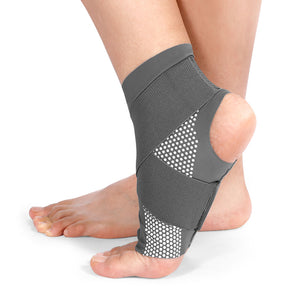
Best Ankle Support For Football
- Black
- Orange
- Green
- Pink
- Black
- Grey
- Blue
- Pink
- Purple
- Black
- Red
- Blue
- Orange
What Do Footballers Wear for Ankle Support?
Football is a dynamic, high-impact sport that demands explosive speed, sudden changes of direction, and aggressive physical contact. Whether you are making a sharp lateral cut on the gridiron or pivoting quickly on a grassy pitch, your lower body absorbs tremendous amounts of force. Because of these intense biomechanical demands, ankle injuries—specifically inversion and eversion sprains—are among the most common setbacks athletes face.
To stay on the field, minimize the risk of recurring injuries, and add a crucial layer of joint stability, players rely on a variety of supportive gear. If you are looking to optimize your game-day performance and protect your lower body, here is a comprehensive breakdown of what footballers wear for ankle support.
High-Performance Ankle Braces
Ankle braces are the most widely used and highly recommended form of joint protection in contact sports. Designed to act as an external scaffold, these braces strictly limit the extreme ranges of motion that lead to rolled or twisted ankles. A premium brace will feature specialized lateral panels or straps to protect against both inversion (the ankle rolling inward, damaging outer ligaments) and eversion (the ankle rolling outward, damaging inner ligaments) injuries.
When evaluating protective gear, athletes must balance stabilization with agility. Modern athletic braces are engineered to fit seamlessly inside snug football cleats without altering the player's natural stride. The best ankle support for football should be incredibly lightweight, highly breathable, and comfortable enough to permit explosive forward movements while actively resisting dangerous side-to-side twisting.
Compression Ankle Sleeves
For athletes who do not require the rigid immobilization of a heavy-duty brace, compression ankle sleeves offer an excellent alternative. These garments are constructed from flexible, moisture-wicking elastic materials that slide easily over the foot. Rather than physically blocking movement, sleeves provide consistent, mild support through targeted joint compression.
Wearing a compression sleeve offers several distinct benefits for football players:
- Improved Blood Circulation: The compressive fabric stimulates oxygen flow to the surrounding tissues, which is vital for stamina.
- Swelling Reduction: Sleeves help manage inflammation and fluid buildup, making them ideal for athletes recovering from minor tweaks or chronic joint soreness.
- Enhanced Proprioception: The tight fit increases sensory feedback from the joint to the brain, improving balance and spatial awareness during high-speed plays.
Many players prefer ankle sleeves to prevent future injuries or manage mild aches, as they eliminate the bulkiness of traditional braces while still providing soothing relief.
Athletic Taping Techniques
Before the rise of advanced wearable technology, traditional athletic taping was the primary method for securing weak joints. It remains a staple in modern locker rooms today. Using specialized athletic tape, team trainers wrap the player’s foot and lower leg to limit excessive movement while reinforcing the joint's structural integrity.
Taping provides highly customized support precisely tailored to a player’s specific anatomical needs or injury history. However, proper application requires significant skill and practice to avoid cutting off circulation or blistering the skin. While taping is undeniably effective for acute injury management, it does have a few drawbacks. The adhesive and tension tend to loosen as the athlete sweats and moves, meaning the tape often needs to be reapplied at halftime, which can be time-consuming.
Spatting (Taping Over the Cleat)
A unique and highly popular variation of taping—especially prominent in American football—is known as "spatting." Instead of just taping the bare ankle, trainers wrap thick layers of athletic tape over the outside of the player's cleat and up around the lower leg.
Spatting serves a dual purpose: it provides a robust external layer of restriction to prevent severe ankle rolls and securely locks the shoe to the foot. This ensures that during aggressive cuts, plants, and tackles, the foot does not slide around inside the footwear, offering an added sense of lockdown security on artificial turf.
Choosing the Right Protection for Your Game
Deciding between a brace, a compression sleeve, or athletic tape ultimately depends on your position, injury history, and the level of mobility you need on the field. Skill-position players who rely on maximum flexibility might gravitate toward breathable compression sleeves, while linemen or those with a history of severe sprains will benefit from the structured support of rigid braces or heavy taping. By understanding the unique benefits of each option, athletes can safely push their limits and perform with absolute confidence.