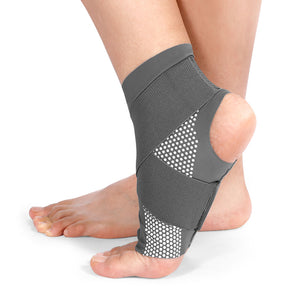
Ankle Brace for Torn Achilles Tendon
- Black
- Grey
- Blue
- Pink
- Purple
- Black
- Red
- Blue
- Orange
- Black
- Orange
- Green
- Pink
Is It Bad to Walk on a Torn Achilles Tendon?
If you have recently experienced a sudden, sharp pain in the back of your lower leg and find yourself wondering, "Is it bad to walk on a torn Achilles tendon?" the immediate answer is an absolute yes. The Achilles tendon is the thickest and strongest tendon in the human body, serving as a crucial structural band connecting your calf muscles to your heel bone. It is fundamentally responsible for enabling normal foot mechanics, allowing you to walk, run, and jump. When this vital tendon is torn, continuing to bear weight on it and walk can be highly detrimental to your long-term mobility.
The Severe Risks of Walking on an Injured Achilles
Attempting to push through the pain and walk on a damaged heel cord places extraordinary mechanical stress on an already compromised area. Doing so carries two primary risks that can drastically alter your recovery timeline.
Worsening a Partial Tear into a Complete Rupture
When you take a step, your entire body weight shifts onto your foot and ankle. If you are suffering from a partial Achilles tear, this repetitive weight-bearing movement puts immense tension on the remaining intact tendon fibers. Walking can easily cause these strained fibers to snap, turning a manageable partial tear into a complete Achilles tendon rupture. This severe aggravation often transforms a situation that could have been treated with rest into a major injury requiring invasive surgical repair.
Disruption of the Natural Healing Process
Walking subjects the injured area to constant mechanical forces that actively disrupt the body's natural biological healing mechanisms. When a tear occurs, your body immediately attempts to repair the damage by laying down new tissue to bridge the gap. However, continuous movement, stretching, and strain prevent the proper formation of scar tissue and the correct alignment of tendon fibers. Consequently, walking on a torn Achilles severely delays the healing process, prolongs your recovery period, and heavily increases the risk of chronic ankle instability or permanent weakness.
Recognizing an Achilles Tendon Tear
Before trying to walk off ankle or heel pain, it is crucial to recognize the symptoms of a tear. Many individuals report hearing a distinct "pop" or feeling as though they were suddenly struck in the back of the calf. This is usually followed by immediate, severe pain, swelling near the heel, an inability to push off the toes, and a noticeable loss of strength in the affected leg.
When Walking is Unavoidable: The Role of Ankle Support
While absolute rest and immobilization are the medical standards for a torn Achilles, there are specific situations where light walking might be unavoidable, or you may be in the transitional early stages of recovering from a very mild micro-tear. In these heavily monitored scenarios, providing your foot with maximum exterior protection is critical.
Providing Crucial Stability
To safely manage necessary movements, an Ankle brace for Achilles tendonitis can provide vital protection. Supportive garments engineered specifically for Achilles issues help stabilize the ankle joint and cradle the heel. This external stability drastically reduces abnormal side-to-side movements and absorbs excessive mechanical stress that would otherwise pull at the vulnerable tendon.
Compression Benefits for Swelling Relief
A primary hurdle in the recovery of lower leg injuries is excessive swelling, which can impede healthy blood circulation and restrict the delivery of essential healing nutrients to the torn tissues. A high-quality tendonitis ankle brace provides targeted, gentle compression to the ankle and heel. This graduated pressure efficiently flushes out localized swelling and mitigates inflammation. Additionally, this snug compression provides a comforting sense of security, making it slightly more bearable to take a few careful steps when absolutely necessary.
Controlling Range of Motion
Ankle braces serve to physically limit the joint's overall range of motion. By preventing extreme dorsiflexion (flexing the toes upward) and plantar flexion (pointing the toes downward), the brace prevents you from accidentally overstretching the heel cord. Creating this controlled biomechanical environment reduces the risk of further tearing and protects the existing injury from unexpected jolts.
Proper Treatment and Next Steps
If you suspect you have sustained an Achilles tendon tear, you should immediately cease all walking and keep weight off the affected leg. Elevate your foot, apply ice to manage the initial swelling, and seek immediate professional medical attention.
Depending on the severity and depth of the tear, your physician will outline a dedicated treatment protocol. Conservative treatments generally involve strict immobilization using a specialized cast or a customized orthopedic walking boot with heel wedges to keep the foot angled downward. More severe ruptures often require surgical intervention to physically stitch the torn tendon ends back together. Regardless of whether your treatment is surgical or conservative, successfully returning to your normal lifestyle will depend on a structured, closely supervised physical therapy program designed to restore full strength, flexibility, and function in your Achilles tendon.