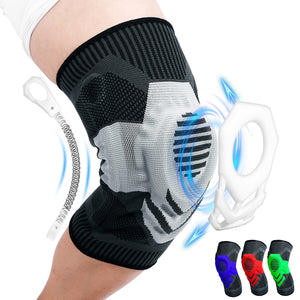
Knee and Ankle Support
- Black
- Grey
- Blue
- Pink
- Purple
- Black
- Orange
- Green
- Pink
- Black
- Red
- Blue
- Orange
Does Ankle Support Help Knee Pain?
Have you ever wondered why a slight tweak or weakness in your lower leg can cause a nagging ache further up your joint pathway? The human body operates as a complex, interconnected system known as the kinetic chain. When one joint is out of alignment, the neighboring joints often pay the price. If you are struggling with lower-body discomfort, understanding the relationship among your joints is crucial to finding long-term relief.
The Kinetic Chain: Understanding the Ankle-Knee Connection
Your feet and ankles serve as the functional foundation for your entire body. Every time you take a step, run, or jump, this foundation absorbs the initial impact from the ground. When the ankle is unstable or weak, it can lead to improper movement patterns that place extra stress on the knee. Conditions like overpronation (where the foot rolls inward) or supination (rolling outward) force the lower leg bones to rotate unnaturally. This misalignment directly transfers shock and strain to the knee ligaments, meniscus, and surrounding cartilage.
This is exactly where targeted joint reinforcement comes into play. Wearing supportive sleeves, wraps, or compression gear around the lower leg can profoundly enhance stabilization. This added layer of stability increases proprioception—your body’s subconscious ability to sense movement and spatial positioning—thereby reducing the likelihood of injuries that can negatively impact the knee.
How Proper Alignment Reduces Joint Stress
When an integrated strategy for knee and ankle support is utilized, it can help maintain proper joint alignment and fluid movement mechanics. This supportive structure actively restricts excessive side-to-side ankle movement, thereby promoting proper knee biomechanics during high-impact or repetitive activities.
Whether you are running on uneven terrain, jumping on a hard court, or executing rapid lateral movements in sports like badminton, tennis, or basketball, maintaining a stable base is essential. Proper ankle support drastically reduces the risk of rolling or twisting. Preventing these sudden shifts is vital because a rolled ankle frequently leads to severe compensatory movements that painfully strain the kneecap and its connective tendons.
Preventing Compensatory Injuries During Recovery
Recovering from a sprain, strain, or muscle tear requires time and the right preventive measures. If someone has recently experienced an ankle sprain or has chronic joint weakness, their natural gait is often compromised. You might catch yourself limping or favoring one side to avoid discomfort. Over time, this uneven weight distribution creates a whole new set of problems, forcing the knee to bear loads it was never designed to handle.
Using dependable ankle support enables a much safer, more confident return to physical activity. It minimizes the risk of aggravating the original injury while preventing the body from overcompensating during load-bearing movements. This protective benefit not only accelerates local recovery but can also indirectly alleviate knee pain caused by poor mechanics, instability, or muscle fatigue.
Boosting Athletic Performance and Everyday Comfort
Ankle support can play an incredibly important role in reducing knee pain and preventing future joint wear and tear. For individuals dealing with chronic joint soreness, athletic strain, or general knee discomfort, looking down at your foundation is a smart first step.
Incorporating targeted ankle stabilization into a broader joint health strategy might yield highly positive outcomes. By ensuring your feet and ankles do not inadvertently sabotage your upper-body mechanics, you can enhance both everyday comfort and peak performance in your favorite physical activities. A stable, well-supported foundation ultimately leads to a stronger, healthier, and pain-free kinetic chain.