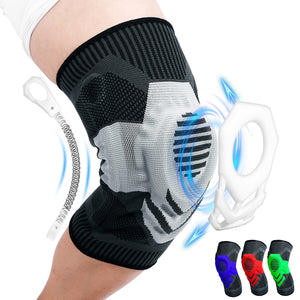
Everyday Ankle Support
- Black
- Grey
- Blue
- Pink
- Purple
- Black
- Orange
- Green
- Pink
- Black
- Red
- Blue
- Orange
Should You Wear an Ankle Support All Day?
Deciding whether to wear ankle protection all day is a common dilemma, especially if you are recovering from an injury or trying to prevent a new one. The short answer is that it depends entirely on your specific circumstances, the severity of your condition, and your daily activity levels.
To help you make an informed decision for your foot and joint health, we need to break down the different scenarios where continuous stabilization is necessary versus when it might be better to let your joint move freely.
Understanding When to Keep Your Gear On
Different musculoskeletal conditions require drastically different timelines for joint stabilization. Here is a closer look at the most common situations.
Acute Injuries and Sprained Ankles
If you have recently suffered an acute injury, such as a severe sprain, twisted foot, or ligament tear, continuous stabilization is often highly beneficial. During the initial healing phase—typically the first few days to a couple of weeks—swelling, inflammation, and pain peak.
In these early stages, wearing an ankle support brace throughout the day is a highly effective way to manage your symptoms. The targeted compression gently constricts local blood vessels, limiting the excess fluid that can accumulate around damaged tissues. By restricting this fluid buildup, you can recover faster and significantly reduce throbbing pain. A firm structural wrap also limits your overall range of motion, preventing unnatural twists that could further damage healing ligaments.
Managing Chronic Ankle Instability (CAI)
Chronic conditions require a long-term, proactive approach. Chronic Ankle Instability (CAI) frequently develops after someone experiences repeated sprains over months or years, which ultimately leaves the ligaments stretched, weakened, and prone to "giving out."
For people living with this ongoing joint looseness, using targeted protection during the day is a critical preventive measure. A semi-rigid or hybrid ankle brace can help correct your lower-body biomechanics. It delivers the extra structural integrity your body struggles to provide naturally during repetitive daily activities like walking the dog, climbing stairs, or standing for extended occupational shifts.
Athletic Performance and High-Impact Sports
Athletes at all competitive levels often depend on joint stabilization to reduce injury risk on the court, track, or field. High-impact sports that demand explosive running, repetitive jumping, and sudden, aggressive changes in direction—such as basketball, soccer, volleyball, and tennis—put immense, unpredictable stress on the lower extremities.
Wearing the right gear provides valuable proprioceptive feedback (your body’s spatial awareness) and mechanical support, helping the athlete perform at their best while warding off painful rollovers. However, remember that not all gear is created equal. Match the wrap or sleeve to your sport to balance maximum agility with the right level of structural support.
The Risks of Wearing Joint Protection Too Much
While wearing a protective sleeve or wrap all day is excellent for acute recovery and heavy activity, overreliance can have a downside. If you wear rigid protection 24/7 for months on end without engaging in active rehabilitation, you risk developing muscle atrophy.
When your muscles, tendons, and ligaments no longer have to work hard to balance and support your body weight, they can gradually weaken. Because of this, it is highly recommended to transition away from full-day use to activity-specific use as your initial injury heals, allowing your natural stabilizers to regain their strength.
Should You Wear It to Bed?
A common question about all-day use is whether the gear should stay on overnight. Generally, unless a medical professional explicitly instructs you to immobilize the joint overnight, you should remove tight, compressive gear before bed. Removing it lets your skin breathe, prevents unnatural friction, and helps keep healthy, unobstructed blood circulation while you rest.
Seeking Professional Guidance
Because every body, anatomical structure, and injury is unique, no universal rule applies to everyone.
For a definitive, personalized answer on how long you should stabilize your joint each day, it is always a smart idea to consult a healthcare provider. A licensed physical therapist, orthopedic specialist, or sports medicine doctor can evaluate your specific gait, joint laxity, and current healing progress. Through a professional assessment, they can determine the exact timeline and type of daily stabilization that best fits your recovery.