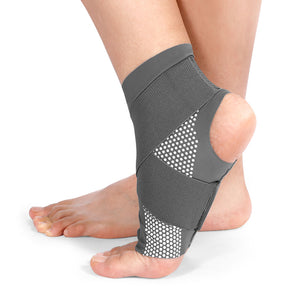
Ankle Support For Basketball
- Black
- Grey
- Blue
- Pink
- Purple
- Black
- Orange
- Green
- Pink
- Black
- Red
- Blue
- Orange
How Do You Strengthen Your Ankles for Basketball?
Basketball is a fast-paced, high-impact sport that demands explosive vertical jumps, rapid directional changes, and sudden stops. Because of the intense physical demands placed on the lower body, the ankle joints experience tremendous stress. Whether you are driving through the paint for a layup, pivoting to pass, or coming down from a rebound, your ankles are your foundation. If you want to prevent ankle sprains in basketball and elevate your on-court performance, developing a comprehensive joint care routine is essential.
By combining proactive physical preparation, protective gear, and optimal basketball nutrition, you can build resilient lower-body mechanics. Here is a deep dive into the three most effective strategies for strengthening your ankles as a basketball player.
1. Master the Pre-Game Warm-Up for Ankle Mobility
Many players step onto the hardwood and immediately shoot threes or scrimmage without properly preparing their joints. A structured, dynamic pre-game warm-up is crucial for basketball injury prevention and optimal biomechanics.
Enhanced Flexibility and Range of Motion
Performing dynamic stretches and light movements before tip-off directly increases ankle range of motion. Unlike static stretching, which involves holding a single pose, dynamic mobility exercises—such as ankle circles, heel-to-toe walks, and leg swings—lubricate the joints and safely stretch the surrounding ligaments. This increased flexibility allows for much smoother, more fluid movement on the court. For example, when you execute a quick crossover or make a sharp cut to drive past a defender, flexible, well-warmed ankles let you perform these maneuvers with greater ease and precision. Ultimately, this reduces the risk of straining, tweaking, or pulling a muscle from sudden, forced hyperextensions.
Increased Muscle Activation
A targeted warm-up does more than just loosen you up; it "wakes up" your nervous system. By doing specific warm-up exercises that target the calves, shins, and stabilizing ankle muscles, you activate them in a controlled way before the game's intense physical demands begin. This improves neuromuscular coordination, ensuring that your muscles are primed to contract and relax precisely when needed. Proper muscle activation also drastically improves your reaction time. When you need to quickly contest a shot or change direction on a fast break, your ankle muscles can respond promptly, providing a stable base for explosive power.
2. Protect Your Joints by Wearing Proper Support
Even with strong muscles and great flexibility, basketball's unpredictability often calls for external support. Stepping on another player's foot after a rebound is one of the most common causes of rolled ankles, and external stabilization can change the game.
Unmatched Injury Prevention
Wearing ankle braces significantly reduces the risk of debilitating ankle injuries during games or practices. Whether you experience a sudden twist while chasing down a loose ball or a heavy collision with an opposing center in the post, basketball ankle braces act as a critical safeguard. They act as an external ligament system, absorbing harmful impact forces, restricting dangerous inward or outward rolling (inversion and eversion), and maintaining the ankle joint's structural integrity. This external support is indispensable for basketball players who are constantly in motion and subjected to immense gravitational and lateral forces.
The Mental Edge and Confidence Boost
The benefits of protective gear aren't just physical; they are also psychological. Knowing that your lower extremities are fully protected by a supportive brace has a profoundly positive mental impact. It lets athletes stop worrying about potential ankle injuries or re-aggravating past sprains and focus on executing plays and reading the defense. The peace of mind an ankle brace provides typically increases a basketball player's confidence. This newfound psychological freedom often translates into better, split-second decision-making on the court, a more aggressive and assertive playing style, and a willingness to attack the basket—all of which enhance your overall gameplay and contribute to your team's success.
3. Fuel Your Body with a Balanced, Joint-Supporting Diet
Athletic conditioning does not stop when you leave the gym. What you put into your body plays a foundational role in tissue recovery, bone density, and stamina. A balanced diet tailored for athletic performance is a hidden secret to building bulletproof ankles.
Prioritizing Bone Health and Density
Your bones form the structural framework of your ankles. Consuming sufficient calcium and vitamin D through nutrient-dense foods—such as high-quality dairy products, fortified cereals, dark leafy greens, and fatty fish like salmon—is non-negotiable for maintaining healthy, robust bones. A standard basketball game involves relentless jumping, sprinting, and hard landings, all of which exert thousands of pounds of force on your skeletal system. Excellent bone density minimizes the risk of stress fractures and other debilitating bone-related injuries, ensuring your ankles can withstand the grueling physical demands of a long season. Vitamin D is also crucial because it unlocks calcium absorption in the gut, and the two work in tandem to support a strong skeletal foundation.
Consistent Energy Provision for Stabilizing Muscles
Fatigue is the enemy of good form. When your body gets tired in the fourth quarter, your footwork gets sloppy, making you highly susceptible to rolling an ankle. Carbohydrates in your diet—specifically complex carbs derived from whole grains, sweet potatoes, fruits, and vegetables—are broken down into glucose and stored in your muscles as glycogen. During an exhausting basketball game, this glycogen serves as the primary fuel powering your entire body, including the tiny, easily fatigued stabilizing muscles around your ankles.
A steady, sustained supply of dietary energy lets your ankles perform at their peak from the first quarter to the final buzzer, maintaining muscular strength and shock-absorbing endurance. Without proper energy provision from a balanced sports diet, the muscles supporting your ankles will fatigue prematurely, severely increasing the risk of catastrophic lower-body injuries.