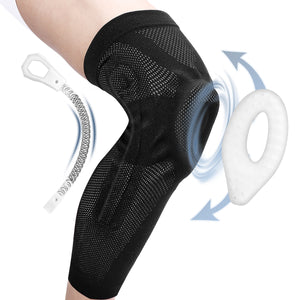
Ankle Brace with Stabilizer
- Black
- Orange
- Green
- Pink
- Black
- Grey
- Blue
- Pink
- Purple
- Black
- Red
- Blue
- Orange
Do Ankle Braces Help with Stability?
If you have ever rolled your foot on an uneven sidewalk, landed awkwardly during a basketball game, or felt your lower leg give out during a morning jog, you have likely asked yourself: Do ankle braces help with stability?
The short answer is a resounding yes. Whether you are a competitive athlete looking to prevent a season-ending injury, an active individual recovering from a severe sprain, or someone dealing with chronic joint weakness, ankle braces can be a highly beneficial addition to your daily routine. As an external support system, these wellness tools help reinforce the natural structures of your foot and lower leg, giving you the confidence to move safely and comfortably.
Let's dive deeper into how proper joint support works and explore the situations where wearing an ankle brace for stability can make a big difference in your mobility and overall quality of life.
When Do You Need Extra Ankle Support?
The human ankle is a complex hinge joint relying on a delicate network of ligaments, tendons, and muscles. When these structures are compromised, your risk of a painful rollover increases dramatically. Here is a closer look at the main scenarios where targeted joint support matters most.
1. After an Injury: Accelerating the Healing Process
When you suffer a sprained ankle, the ligaments that typically provide essential stability to the joint are suddenly stretched beyond their normal limits or, in severe cases, torn entirely. Once compromised, these vital ligaments struggle to hold the joint in its proper anatomical position, leaving you vulnerable to recurrent injuries.
During this critical recovery phase, a well-designed rigid ankle brace functions exactly like a supportive external skeleton. It effectively limits the ankle's overall range of motion, strictly restricting excessive inversion (rolling the ankle inward), eversion (rolling the ankle outward), plantarflexion (pointing the foot down), and dorsiflexion (pulling the foot aggressively upward).
By controlling these specific movements, the support protects your healing ligaments from further microscopic tearing. This protective restriction gives the joint the structural integrity it temporarily lacks, letting you handle daily tasks like climbing stairs or commuting without the constant fear of a painful setback.
2. During High-Impact Sports and Athletic Activities
Athletes—particularly those in sports that demand aggressive running, explosive jumping, and rapid lateral changes in direction like basketball, soccer, volleyball, and tennis—face a significantly higher risk of acute lower-body injuries.
Wearing a specialized stability brace can dramatically enhance your physical confidence during these intense activities. Many modern athletic supports feature built-in lateral stabilizers engineered specifically for dynamic movement. These often include semi-rigid side panels or figure-eight strapping systems that lock the heel firmly in place, actively preventing the foot from rolling inward or outward upon a hard landing. If you frequently play sports that require sudden lateral movements, pivoting, and abrupt stops, this proactive reinforcement is one of the best ways to stay off the bench and in the game.
3. Managing Chronic Joint and Foot Conditions
Beyond acute sports injuries, millions of people deal with underlying conditions like osteoarthritis, rheumatoid arthritis, or tendonitis that directly impact the lower extremities. Aging joints and arthritis can lead to chronic pain, stiffness, and a persistent feeling of physical instability.
Braces for ankle instability are excellent tools for reducing the daily mechanical stress placed on a compromised joint. By providing soothing compression and robust external support, they help distribute your body weight much more evenly across the foot. They can also help correct abnormal or compensatory gait patterns—such as limping or over-supination—that often develop subconsciously as your body tries to avoid pain while walking.
Maximizing the Benefits of Your Support Gear
While bracing offers clear advantages for injury prevention and recovery, remember that wearing a support garment is only one piece of the wellness puzzle. Even the most advanced gear is no substitute for proper physical rehabilitation, targeted strength training, or professional guidance.
If you experience a severe sprain or deal with chronic weakness, a comprehensive physical therapy plan focused on restoring your natural balance and proprioception is absolutely critical. Also, your support's effectiveness depends heavily on choosing the right style and ensuring a snug, comfortable fit tailored to your unique anatomical needs. Whether you need a lightweight compression sleeve to slip inside a running shoe or a heavy-duty option for post-trauma recovery, finding the right match is key to long-term health, stability, and mobility.