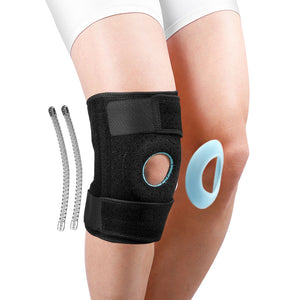
XXXL Knee Brace
- Black
- Green
- Orange
- Pink
- Black
- Blue
- Green
- Red
- Orange
- Blue
- Dark Blue
- Black
- White
- Red
- Blue
- Black
- Blue
- Red
- Orange
- Yellow
- Black
- Blue
- Green
- Red
- Blue
- Black
- White
- Red
- Dark Blue
- Grey
- Black
- Blue
- Pink
- Grey
- Black
- White
- Light Black
- Black
- Light Grey
- Grey
- Magenta
- Black
- Green
- Black
- Grey
- Red
- Blue
How to Determine Knee Brace Size: A Guide to Finding the Perfect Fit
Whether you are recovering from a recent joint injury, managing chronic knee pain, or looking for extra stability during your favorite sports, finding the right knee support is crucial. However, even the highest-quality joint support will fail to do its job if it does not fit properly. A knee sleeve or wrap that is too tight can cause painful chafing and restrict vital blood flow, while one that is too loose will slip down your leg and offer zero stability.
Why Knee Brace Sizing Matters
Many people wonder, "How tight should a knee brace be?" The perfect fit provides firm, reassuring compression without pinching your skin, cutting off circulation, or bunching up behind the knee. A well-fitted brace supports the patella (kneecap), warms the surrounding ligaments, and improves proprioception—your body's awareness of its position in space. Taking a few minutes to measure your leg correctly prevents the frustration of returns and ensures you get the maximum therapeutic benefits from your supportive gear.
Step 1: How to Measure Your Knee Accurately
The first step in discovering what size knee brace you need is to take precise measurements of your leg. Grab a flexible fabric measuring tape (if you do not have one, you can use a piece of string and measure it against a standard ruler later) and follow these simple steps:
1. Measure Around the Mid-Patella
Stand up straight or sit with your knee bent at a slight 30-degree angle. Locate the exact center of your kneecap (the patella). Wrap the measuring tape directly around this center point. Ensure the tape rests snugly against your skin but is not pulled tight enough to create an indentation.
2. Measure the Lower Thigh (Above the Knee)
Next, find the circumference of your lower thigh. Measure approximately 5 to 6 inches above the center of your kneecap. This measurement is incredibly important because the thigh is where most supports tend to roll down or pinch. If you carry more weight in your upper legs, an accurate thigh measurement is key to successfully shopping for a plus-size knee brace that stays comfortably anchored in place all day.
3. Measure the Upper Calf (Below the Knee)
Finally, measure your upper calf circumference by wrapping the tape about 5 to 6 inches below the center of your kneecap. This ensures the bottom hem of the support will secure properly without restricting the blood vessels in your lower leg.
Pro Tip: Always write down your measurements in both inches and centimeters, as different companies use different sizing systems in their size guides.
Step 2: Consult and Compare Size Charts
Because there is no universal sizing standard in the joint support industry, a "Large" in one company's line might be a "Medium" in another. Always refer to the specific sizing chart provided for the exact model you are purchasing.
Compare your three measurements (thigh, knee center, and calf) against the chart. If you are specifically seeking a 3XL knee brace for bariatric support or heavy powerlifting, double-check that the fabric's maximum stretch capacity accommodates your thigh measurement to avoid the dreaded "tourniquet effect."
What If You Are Between Sizes?
If your measurements fall exactly between two different sizes, the general rule of thumb is to size up. Opting for the larger size prioritizes everyday comfort and prevents excessive constriction. However, if you are an athlete looking for strict, high-level compression to stabilize a recovering injury, sizing down might provide the firmer grip you require.
Step 3: Factor in the Type of Knee Support
The brace's structural design significantly affects how it fits your leg. There are several different styles built for various mobility and rehabilitation needs:
- Compression Sleeves: These slide directly over the foot and up the leg. They rely heavily on accurate measurements because they cannot be manually tightened.
- Wraparound Braces: Featuring adjustable hook-and-loop straps, wraparounds are highly forgiving. They are an excellent choice if your thigh and calf measurements fall into two entirely different size categories.
- Hinged Braces: Designed for maximum immobilization and severe instability, hinged supports are rigid. A precise fit is absolutely mandatory here, as metal or hard plastic hinges must align perfectly with the natural bending point of your joint.
Make sure the structural style you select directly aligns with your physical requirements, whether that means gentle daily warmth or rigid lateral stabilization.
Step 4: Try It On and Test Your Mobility
If you have the opportunity to try the support on before committing, take full advantage of it. Put the brace on and assess how it feels against your skin. Does it provide adequate stability without feeling overly restrictive?
To truly test the fit, do not just stand still. Walk around the room, practice sitting down and standing up, and try doing a gentle squat or walking up a flight of stairs. Pay close attention to whether the fabric bunches up uncomfortably behind the knee joint or slips down your thigh. If you are testing an extra-large knee brace, verify that the structural supports (such as side stabilizers or gel pads) sit exactly where they are supposed to—flanking the kneecap.