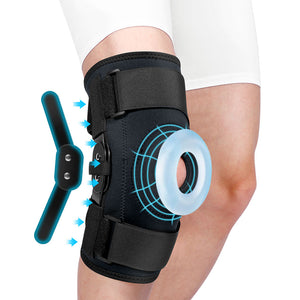
Knee Brace With Side Stabilizers
- Black
- Green
- Orange
- Pink
- Black
- Blue
- Green
- Red
- Orange
- Blue
- Dark Blue
- Black
- White
- Red
- Blue
- Black
- Blue
- Green
- Red
- Dark Blue
- Grey
- Black
- Blue
- Pink
- Grey
- Black
- White
- Light Black
- Black
- Light Grey
- Grey
- Magenta
- Black
What is the Most Important Stabilizer in the Knee?
When evaluating the biomechanics of the human body, the knee joint stands out as one of the most complex and heavily utilized hinge joints. Because it bears a significant portion of our body weight and facilitates a massive range of motion, it requires a robust system to keep it properly aligned. So, what is the most important stabilizer in the knee? The truth is, knee stability relies on a comprehensive network of ligaments, surrounding muscle groups, and intricate soft-tissue structures working in perfect harmony.
Understanding Knee Anatomy: The Role of Ligaments
While the knee joint relies on various muscular components, the primary natural stabilizers are the ligaments. Specifically, the Medial Collateral Ligament (MCL) and the Lateral Collateral Ligament (LCL) are essential anatomical structures. The MCL secures the inner aspect of the joint, preventing it from collapsing inward, while the LCL reinforces the outer side, keeping the joint from bowing outward.
Though these resilient bands of tissue offer inherent stability and govern our daily movements, they are not invincible. High-impact physical activities, sudden twisting motions, or chronic degenerative joint conditions can easily compromise these critical ligaments, leading to weakness, discomfort, or severe injury.
The Crucial Need for External Joint Reinforcement
When natural ligaments are strained, fatigued, or healing from wear and tear, reinforcing the area becomes an absolute necessity to prevent further joint degradation. This is precisely where a knee brace with side stabilizers plays a critical role in joint recovery and daily protection.
By providing structured, targeted support, this type of specialized equipment effectively limits harmful side-to-side (lateral and medial) movements. It essentially acts as an external set of ligaments, taking the daily mechanical strain off your natural tissues. This reduction in stress allows compromised ligaments the crucial time they need to heal properly while simultaneously shielding the joint from repetitive micro-traumas associated with walking, bending, and lifting.
Enhancing Proprioception and Confidence in Movement
Beyond physical structural reinforcement, introducing targeted external support has a profound impact on the nervous system—specifically through enhanced proprioception. Proprioception is our body’s subconscious ability to sense joint position, physical movement, and spatial awareness.
When you experience a joint injury, proprioceptive signals often become disrupted, leading to a feeling of weakness or the unsettling sensation that the knee might suddenly "give out." Wearing a brace equipped with lateral and medial stabilization delivers consistent sensory feedback to the skin and underlying joint receptors. Individuals consistently report a substantially greater sense of stability, security, and physical grounding when utilizing this supportive garment.
This enhanced proprioceptive feedback is a game-changer for active rehabilitation. It allows individuals to confidently engage in low-impact exercises, stretching routines, and physical therapies that actively promote muscular strength and tendon flexibility around the kneecap without the lingering fear of re-injury.
Boosting Athletic Performance and Proactive Prevention
You do not need to wait for a severe injury to benefit from advanced joint stabilization. In addition to aiding recovery, integrating reliable knee support is highly beneficial for maximizing overall athletic performance and sustaining an active lifestyle.
Many fitness enthusiasts, runners, and athletes utilize external stabilization as a proactive, preventive measure. This is especially true during high-impact sports—such as basketball, soccer, marathon running, and weightlifting—where unpredictable knee injuries are statistically prevalent. A well-designed supportive structure not only safeguards the joint against potential traumatic injuries but also empowers active individuals to perform at their absolute peak. It permits a safe, full range of motion, allowing athletes to push their limits confidently.