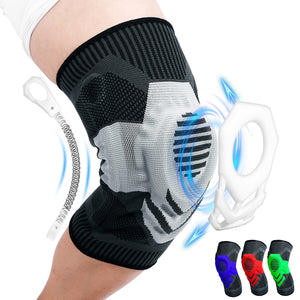
Weightlifting Knee Wraps
- Black
- Green
- Orange
- Pink
- Black
- Blue
- Green
- Red
- Orange
- Blue
- Dark Blue
- Black
- White
- Red
- Blue
- Black
- Blue
- Red
- Orange
- Yellow
- Black
- Blue
- Green
- Red
- Blue
- Black
- White
- Red
- Dark Blue
- Grey
- Black
- Blue
- Pink
- Grey
- Black
- White
- Light Black
- Black
- Light Grey
- Grey
- Magenta
- Black
- Green
- Black
- Grey
- Red
- Blue
Why Do Weightlifters Wrap Their Knees?
Weightlifting is an incredibly demanding sport that requires not only raw strength and refined technique but also a strict focus on injury prevention and overall joint longevity. If you have ever spent time in a serious strength-training facility or watched competitive powerlifting, you have likely noticed athletes tightly wrapping thick elastic bands around their legs before a heavy set. But why do weightlifters wrap their knees, and what actual biomechanical benefits do these accessories offer?.
The Mechanics of Knee Wrapping in Strength Training
Knee wraps are essentially long, high-tension elastic bands that are tightly coiled around the knee joint just before performing heavy lower-body exercises. When athletes use these bands, they create an intense compressive effect that physically locks the knee joint into a highly stabilized position.
Elastic Energy and the "Rebound" Effect
The primary reason powerlifters and heavy squatters use this equipment is the physics of elastic energy. As a lifter descends into the bottom of a squat or leg press, the tightly wound fabric stretches. This stretching action stores immense elastic potential energy. As the athlete transitions from descent to the upward push, the wraps contract violently, releasing that stored energy. This creates a "rebound" or "spring" effect, physically assisting the lifter out of the most difficult part of the movement—the bottom of the squat.
Top Benefits of Wrapping Your Knees for Heavy Lifts
Incorporating wraps into a strength training routine goes far beyond just looking like a seasoned gym veteran. There are tangible, performance-enhancing benefits that appeal to both competitive athletes and everyday fitness enthusiasts.
Increased Joint Stability and Compression
Lifting massive amounts of weight puts exceptional sheer force on the ligaments and tendons of the lower body. Whether an athlete opts for competition-grade rigid elastics or a more flexible neoprene wrap-around knee brace, the primary purpose remains the same: providing maximum joint stabilization. This tight compression ensures that the patella tracks properly and prevents the knee from caving inward (valgus collapse) during maximal exertion.
Smashing Personal Records
Because of the aforementioned rebound effect, lifters can simply move more weight. Studies and anecdotal evidence from elite strength athletes suggest that a well-executed wrap job can add anywhere from 20 to 50 pounds to a lifter's one-rep max. For experienced lifters looking to shatter personal records or dominate in competitions, this additional power output is absolutely crucial.
Alleviating Joint Discomfort
Heavy resistance training takes a toll on the body over time. Many older weightlifters, or those with a history of joint wear and tear, experience nagging aches during deep flexion movements. By utilizing targeted knee brace wrap support, athletes can experience a significant reduction in the sheer stress placed on their patella and surrounding tendons. This added layer of security allows lifters to train with confidence, knowing their joints are heavily protected against the immense downward pressure of the barbell.
When Should You Use Knee Wraps?
While the benefits are highly attractive, knee wraps are not intended for everyday, casual gym use. They are specialized tools designed for maximal or near-maximal loads.
You should consider using them when:
- Attempting a One-Rep Max (1RM): When you are pushing your absolute physical limits on squats or heavy leg presses.
- Competing in Powerlifting: If your federation allows it, wrapping can give you the competitive edge needed to secure a podium finish.
- Overcoming a Plateau: When your squat numbers have stalled, the psychological and physical boost of a wrap can help you break through mental barriers.
Best Practices to Avoid Over-Reliance
It is essential to note that while wrapping can drastically enhance acute performance, it is never a substitute for proper lifting technique, a strong core, or a well-rounded training program.
Relying on this equipment too frequently can actually be detrimental. Constant, over-reliance on a knee wrap brace can lead to underdeveloped stabilizing muscles. If the elastic band is doing all the work to stabilize the joint, your actual tendons, ligaments, and smaller stabilizer muscles are not getting the stimulus they need to grow stronger. Over time, this imbalance can lead to weakness and an increased risk of injury when you lift without the wraps.
Therefore, weightlifters should integrate this equipment into their regimen judiciously. Warm up without them, perform your lighter working sets unassisted, and only apply them when the weight reaches 80% to 90% of your maximum capacity.