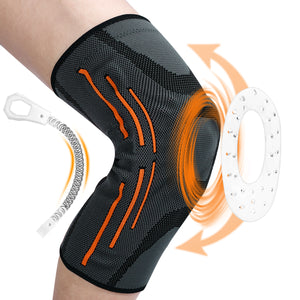
Small Knee Brace
- Orange
- Blue
- Dark Blue
- Black
- Green
- Orange
- Pink
- Black
- Blue
- Green
- Red
- White
- Light Black
- Black
- Light Grey
- Grey
- Magenta
- Black
- Black
- Blue
- Red
- Orange
- Yellow
- Blue
- Black
- White
- Red
- Blue
- Pink
- Grey
- Black
- Green
- Black
- Grey
- Red
- Blue
- Black
- Blue
- Green
- Red
- Dark Blue
- Grey
- Black
- Black
- White
- Red
- Blue
Should Knee Braces Be a Size Larger or Smaller?
Knee braces are essential tools for anyone seeking joint support, whether recovering from injury, undergoing post-surgical rehabilitation, or managing chronic knee pain. When shopping for knee support, one of the most frequently asked questions is whether you should choose a size larger or smaller than your measured dimensions. The answer isn't a simple "yes" or "no." Finding the perfect fit requires a careful look at your specific knee condition, the brace's purpose, and your unique anatomical measurements.
The Crucial Role of Proper Sizing in Knee Support
Proper sizing is the foundation of effective knee rehabilitation and injury prevention. If your knee sleeve is too tight, it can quickly restrict blood circulation, cause severe skin pinching, and exacerbate the very joint pain you are trying to treat. On the other hand, if you opt for a support that is excessively loose in hopes of maximizing mobility, the brace will inevitably slide down your leg, offering zero structural integrity. The primary goal is to achieve an optimal balance where the fabric provides targeted compression and joint stability without compromising your everyday comfort.
When Should You Choose a Smaller Size?
There are specific scenarios where leaning towards a snugger, smaller fit is highly beneficial. For individuals with naturally slender legs or narrow joint structures, exploring specialized small knee braces can deliver the precise compression required to support injured ligaments.
When dealing with athletic stabilization—such as running, basketball, weightlifting, or cross-training—a slightly tighter fit ensures the gear stays securely anchored in place during vigorous physical activity. Sizing down slightly to achieve a tighter compression level can also enhance proprioception (your body’s awareness of joint positioning), which is vital for preventing future sprains or strains. However, a snug fit should never cross the line into being painfully restrictive or cutting off blood flow.
When is Sizing Up the Better Option?
Conversely, there are plenty of situations where moving up a size makes perfect sense. If you are recovering from recent knee surgery, an ACL reconstruction, or dealing with acute trauma, substantial swelling and inflammation are to be expected. In these cases, a slightly larger size accommodates fluid retention, preventing the material from digging into sensitive, swollen tissues.
Sizing up is also a smart strategy for individuals with chronic conditions like osteoarthritis, for whom prolonged all-day wear is necessary. A marginally looser fit ensures maximum comfort for extended periods while still offering gentle support and soothing warmth to aching joints.
How to Accurately Measure for Your Perfect Fit
To avoid the guesswork of sizing up or down, it is highly recommended to take precise measurements before making a decision. Grab a flexible measuring tape and follow these standard steps:
- Measure the Knee Center: Find the circumference directly over the center of your kneecap (patella) while standing with your leg slightly bent.
- Measure the Thigh: Move approximately five to six inches above the center of the kneecap and measure the circumference of your lower thigh.
- Measure the Calf: Measure five to six inches below the kneecap around the thickest part of your calf muscle.
Comparing these three specific dimensions against a standard sizing chart will yield the most accurate result, significantly reducing the likelihood of purchasing the wrong size.
Matching the Fit to the Right Brace Type
The specific design of your chosen knee joint brace heavily influences how it should fit your leg. For instance, hinged braces designed for severe meniscus tears or collateral ligament injuries require precise alignment with your knee's biological hinge. If these are sized incorrectly, the mechanical hinges will rub uncomfortably against your bones.
Meanwhile, flexible compression sleeves used for minor sprains or tendonitis offer more stretch, making them slightly more forgiving if you happen to fall right on the borderline between two sizes. Always consider the rigidity, material, and primary function of the support when evaluating your sizing options.
Warning Signs Your Knee Brace is the Wrong Size
If you are currently wearing a knee support and questioning its effectiveness, look out for these common red flags:
- It is too small if you experience numbness, coldness, or tingling in your lower leg and feet; your skin bulges excessively at the top or bottom edges; or you notice deep red indentations in your skin after removal.
- It is too large if you find yourself constantly pulling the fabric back up during a simple walk, the material bunches up heavily behind the knee crease, or you feel no noticeable compression or stability when putting weight on the affected leg.
Final Thoughts on Achieving the Perfect Fit
Whether you should size up or size down depends entirely on your personal needs, the severity of your knee condition, and the natural shape of your leg. While standard tape measurements provide an excellent baseline, factors such as anticipated post-op swelling or the need for stabilization during high-impact sports will dictate your final choice. Prioritizing comfort, proper blood flow, and adequate joint stability will guarantee you get the maximum therapeutic benefits from your knee support. When in doubt, consulting with a physical therapist or other healthcare professional can provide personalized guidance tailored to your recovery path.